As Head of Seva of the TadEkam Foundation, I strategised the revival of our holy rivers as life-givers by restoring the 1,000-year-old Sanatan tradition of Kumbh and Pushkaralu as platforms for Ruler, Saints and Society to join forces to clean them—beginning with Maa Godavari, 2026–2028.
The Maa Godavari Seva Hi Snan Kumbh – Pushkaralu Strategy, 2026–2028, rests on three pillars: (1) Government to enact a Godavari Heritage River Act and a Brahmagiri Heritage Site Act, making encroachment and pollution illegal; (2) Saints and Swamis to declare the Godavari ‘Maa’ (Mother), with ecological seva to Her as the ritual dip (#SevaHiSnan); and (3) Society to make the villages on Her banks free of plastic, flex banners and Jal Tattva pollution.
Embraced the strategy
Teeparru selected to become the first Godavari village free of plastic, flex banners and water pollution
Smt Himgauri Aher-Adke has begun unfolding #SevaHiSnan Strategy for Godavari Kumbh in Nashik
First math to agree to implement #SevaHiSnan during Kumbh in Nashik in 2027-2028
Waterman of India Dr Rajendra Singh to help spread message of #SevaHiSnan for Nashik Kumbh

In January 2026, as Phase 1 of the Kangundi project concluded, Mahavatar Babaji TadEkam Foundation received its next mandate: address India’s escalating water pollution crisis through what Mahavatar Babaji termed Jal Tattva Seva — service to the Water Element. Rather than launch another clean-up initiative, we began with root-cause research: reviewing existing studies and literature, then physically surveying the Godavari’s full 1,465-km course, from its origin at Brahmagiri to its Bay of Bengal outlets at Rajahmundry, Corangi Creek and Antarvedi.
That diagnostic work produced a 20-page Maa Godavari Seva Hi Snan Kumbh – Pushkaralu Strategy, built around three coordinated intervention tracks: government legislation — a proposed Godavari Heritage River Act; religious-institutional reform — enlisting saints and spiritual leaders to formally recognise the river’s sacred status and correct ritual practices that had drifted from that principle; and cross-sector mobilisation — bringing government, religious institutions and civil society into a single coordinated conservation effort, targeting a river that is free-flowing, clean, and life-sustaining (aviral, nirmal jeevan-dayani).
To build the coalition needed to execute this, our team conducted a structured stakeholder outreach campaign — engaging political leaders, religious authorities and community organisers across thirteen cities, from Haridwar and Rishikesh to Hyderabad and Pune.
The case that ultimately moved the Andhra Pradesh government was economic as much as cultural: a comparative analysis I built, contrasting Uttar Pradesh’s Mahakumbh 2025 — a 40-day event that required an estimated ₹7,500 crore in government spending to generate roughly ₹25,000 crore in direct income, within an estimated ₹3 lakh crore of total economic activity — against the potential of a full-year Godavari Pushkaralu spread across 2027–28. Stretched over a year instead of 40 days, the same visitor economy offered a fundamentally better capital-efficiency curve: sustained spending, deeper infrastructure utilisation, and a materially lower government spend per rupee of income generated. That analysis, more than the cultural argument alone, is what secured the commitment. By May-June 2026, Andhra Pradesh Deputy Chief Minister Shri Pawan Kalyan and Nashik Mayor Smt Himgauri Aher-Adke had both adopted the strategy for their jurisdictions. This strategy has also been embraced by Shri Ashish Bhai of Gagangiri Maharaj Math in Khopoli, Maharashtra. We also have the support of Waterman of India Dr Rajendra Singh (Bhai) Ji and Jal Biradari Network of Jal Tattva Sevaks spread across Maharashtra.
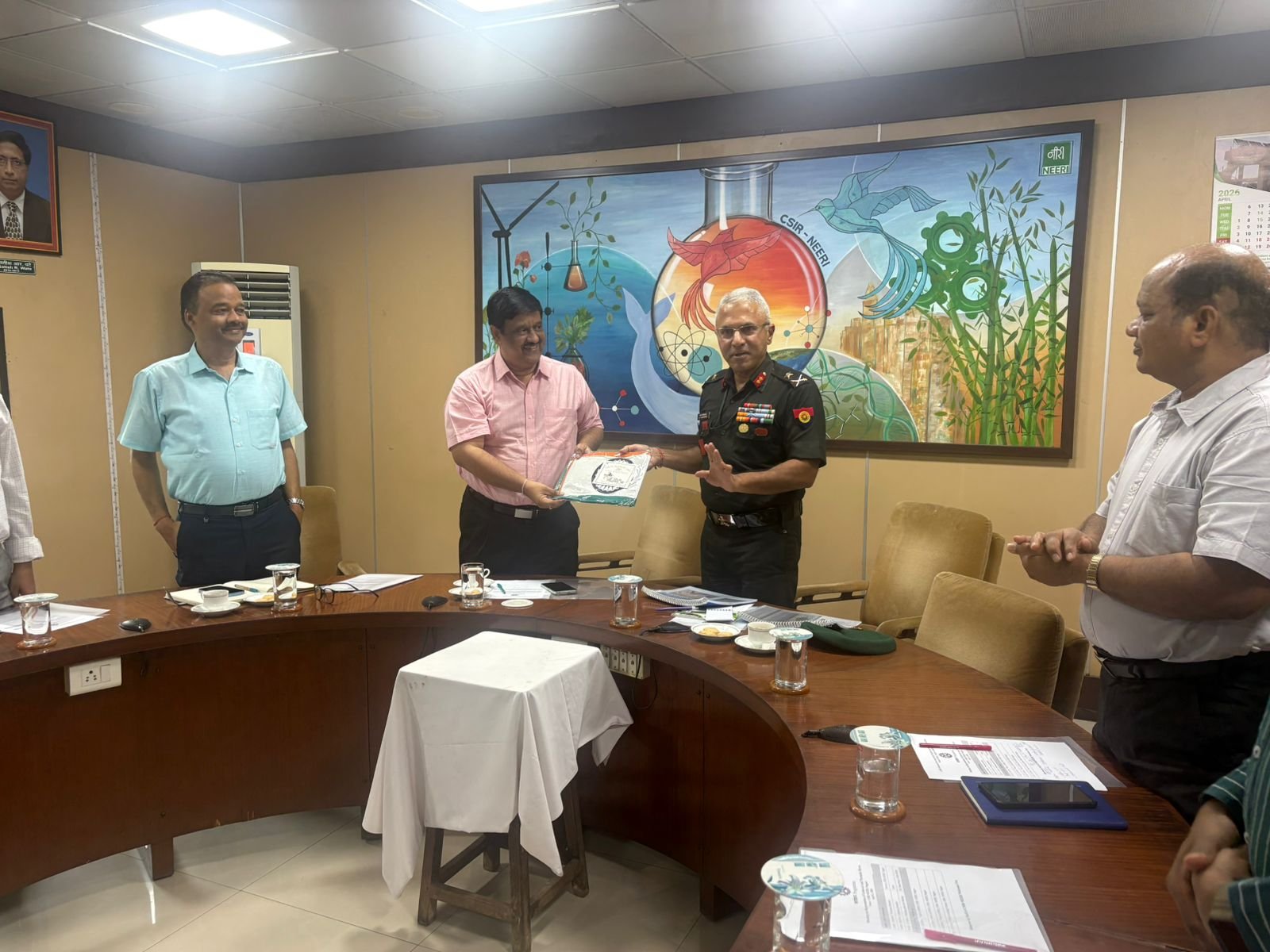
These commitments translated quickly into a pilot implementation. Working with Andhra Pradesh Tourism Minister Shri Kandula Durgesh, we selected Teeparru village, on the Vasishta Godavari in West Godavari, as India’s first Pushkaralu Model Village — a live proof-of-concept for the full strategy. The National Environmental Engineering Research Institute joined as scientific partner, targeting plastic, signage and water pollution reduction on a measurable basis. A community-run logo competition produced a shared village identity, launched jointly with the Tourism Ministry, and — at the direct request of residents — Teeparru’s Chintalamma Pond was cleaned for the first time in nearly two decades, its water visibly clear again by September 2026.
The strategic goal ahead is policy-level adoption: at least one of the four Godavari basin states enacting heritage-river legislation, and religious institutions (Akhadas, Ashrams, Maths and Temples) shifting the operating philosophy of Kumbh and Pushkaralu gatherings from ritual bathing alone toward active river stewardship — a shift we’ve framed as #SevaHiSnan, service as the true ritual. Successfully proven, this model is designed to be replicated across India’s other sacred rivers, each tied to the same twelve-year Pushkaralu cycle — turning one pilot into a national river-conservation framework.
This is, at its core, a change-management and multi-stakeholder-coalition problem disguised as a religious one: diagnosing why decades of infrastructure-only intervention failed, then designing an incentive and belief structure durable enough to outlast any single administration’s term.
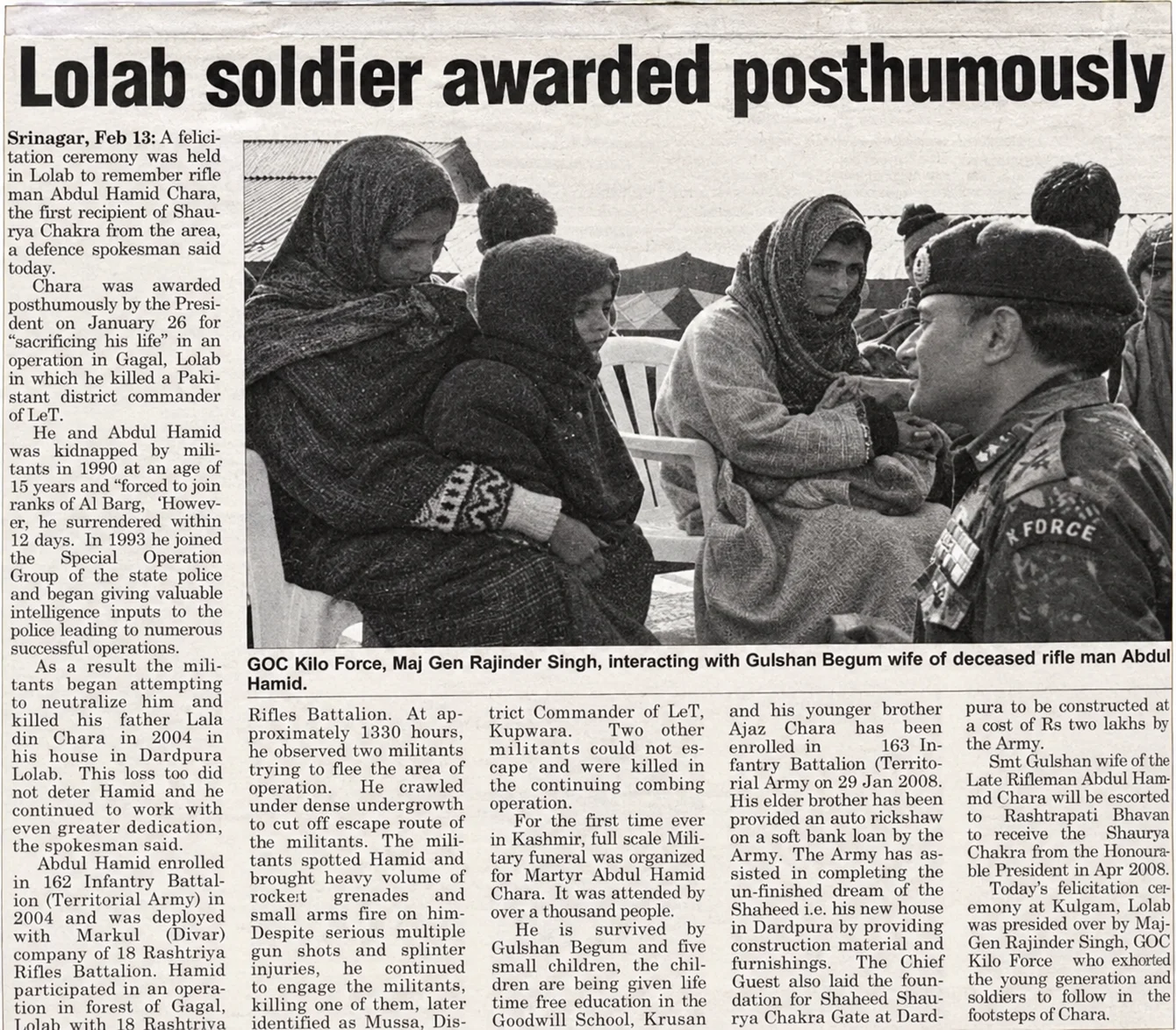
In 2006, I asked Sanjay to volunteer for something few officers would — command of 18 Rashtriya Rifles (Rajputana Rifles), a unit reeling from three soldier suicides. He didn’t hesitate, even giving up his own Rajputana Rifles battalion in a peace station in Rajasthan to take on a troubled unit in the counter-terrorism theatre of North Kashmir. I knew the man; I didn’t know he’d deliver this fast. He gave 18 RR a vision that brought peace to Lolab and rebuilt the unit itself as an effective team. By January 2009, that same unit stood decorated with the Army Commander’s Unit Appreciation — he delivered exactly what I expected, and then some more.
He never called himself our Commanding Officer. He was our Leader in Charge. And in 2006, he set before us a vision that left every officer in the unit stunned: that the people of Lolab would vote for India in a plebiscite in 2010. For a valley that had known little but suspicion and violence, it sounded impossible. But as we watched him pursue it, relentlessly and without pause, our doubt turned into belief.
What set Major General Sanjay Vishwasrao apart was that he never worked at just one level. He could outmanoeuvre and neutralise terrorists with the utmost economy of force, and at the same time carry out the slower, harder work of winning the people away from the cause of azadi and the terrorists who enforced it. He thought and delivered simultaneously at the tactical, operational and strategic levels, a rare combination I have seldom seen since.
My own Shaurya Chakra, earned with 18 Rashtriya Rifles, rests on his strategic brilliance. I carried out the action; he had already done the thinking that made it possible. In a single hour, my team neutralised four terrorists using only 70 rounds of AK-47 ammunition, with zero collateral damage. That outcome was built on everything he had put in place: the trust of the people, which gave us human intelligence; manoeuvre that trapped the terrorists in the chosen area; and training in controlled, precise fire. That day, hard work also met fortune. Two of my soldiers survived direct hits of terrorist fire, one saved by his bulletproof patka and the other by his bulletproof jacket.
Years later, through his updates from Srinagar in 2021 and 2022, I watched that same vision, unchanged in its logic and grown only in scale, unfold across the whole of Kashmir: Lal Chowk reclaimed without bloodshed, and a peace that reached ordinary Kashmiris in a way few thought possible. I was not surprised. He had done it before, and he did it again, the same way.
I look forward to the second edition of Lage Raho Leadership, the story of our journey together with 18 Rashtriya Rifles in Lolab, North Kashmir.
I first met Sanjay as a young Commanding Officer of 18 Rashtriya Rifles in Lolab. It was the first time I had heard a Colonel speak of vision and manoeuvre in counter-terrorist operations, and I confess I returned sceptical — such talk is easy, delivery is not. He went on to prove himself right on every parameter that mattered: terrorist kills, zero stone-pelting, a high voter turnout, not one negative incident. His book on that unit, Lage Raho Leadership, is an accurate account of exactly what I saw unfold in Lolab with my own eyes. That was 2007. I have, in one way or another, watched Sanjay almost continuously ever since. I liked his professionalism enough to pick him as my Colonel Military Secretary when I commanded a Strike Corps — he agreed on one condition, that I teach him mechanized Strike Corps operations in return, and I did. After I retired, I visited him in Assam in 2015 and saw him building tribal culture into a strategy for peace. Then in 2016, he was selected as India’s Defence & Military Advisor in Pakistan — the very appointment I had held myself, a decade before him. Only the best Brigadiers are ever selected for that posting, the toughest diplomatic assignment India has, and his tenure fell in a period that made it tougher still: the “No Terror & Talks” policy, the Pulwama–Balakot conflict, and the abrogation of Article 370. I visited him again in Srinagar in 2021, to see the start of his Tricolour Revolution Strategy, for which General Bipin Rawat had selected him. He delivered again — bloodless peace in Kashmir. Across all these years and all these postings, what has struck me most is Sanjay’s ability to grasp a complex situation, design a real solution, and then actually execute it. He truly lived up to his surname, Vishwasrao, and delivered on each task to his best ability — and to my utmost satisfaction. To get it done, and done well, Sanjay has been my go-to officer for a long time. Through every bit of it, Sanjay and Sanjeevani have remained, in a way I have rarely seen at that level, simply humble — and that, in the end, is the rarer achievement..