Lessons from 37 years of leading change, written for those who must lead it next.
Across 37 years of service, my writing traces the evolution from battlefield leadership to strategic thought and societal transformation. I have written what I later executed. And I have also written about what was executed to share & spread the knowledge.
My 2020 National Defence College thesis on countering political-defiance movements became the Kashmir Tricolour Revolution; my 2010 Higher Command College thesis on manoeuvre over firepower shaped Information Warfare strategy still used today; my earliest thesis 2001, on the roots of low intensity conflicts in India, won the Lentaigne Medal and outlined patterns I spent a career investigating and testing in the field.
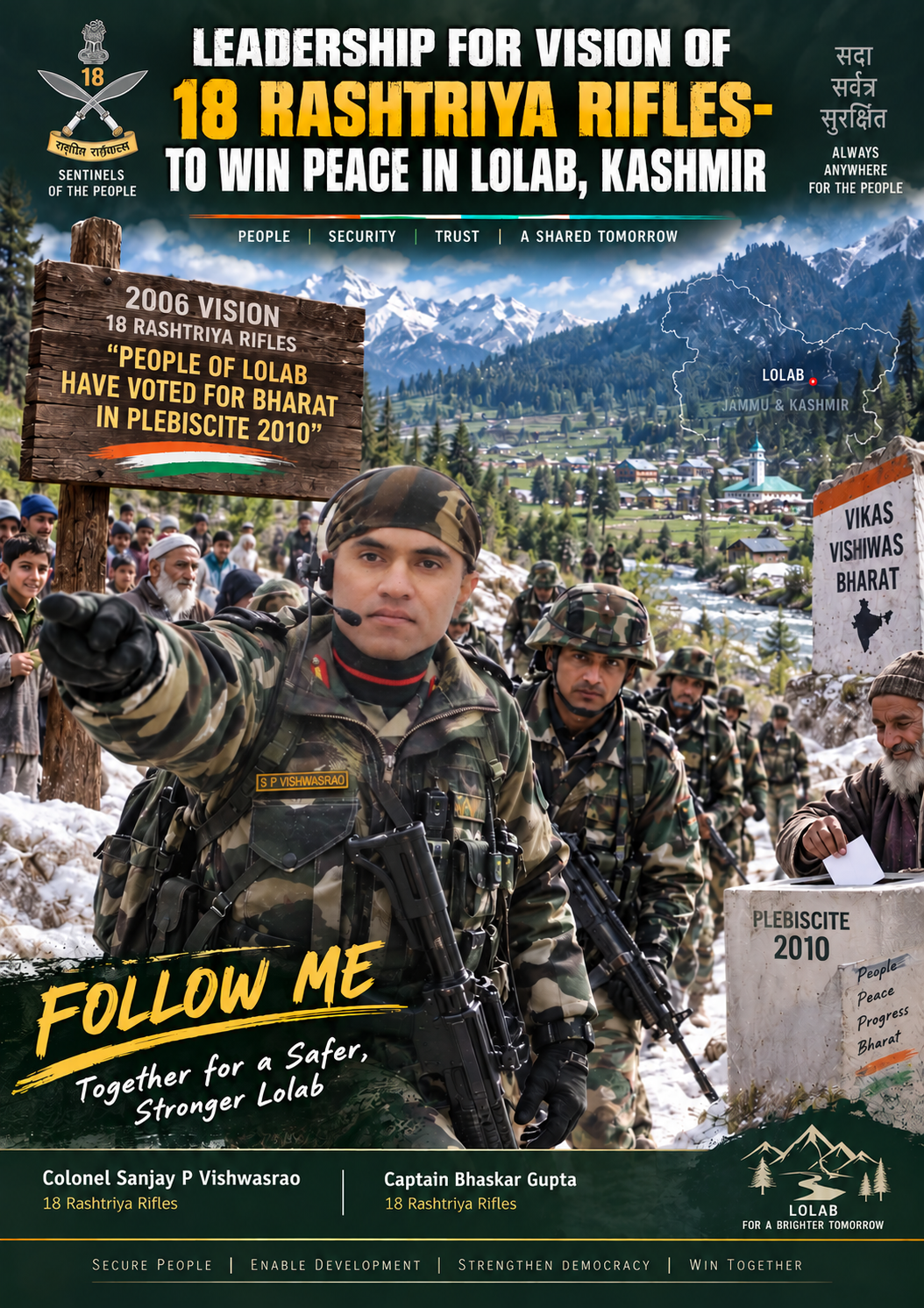
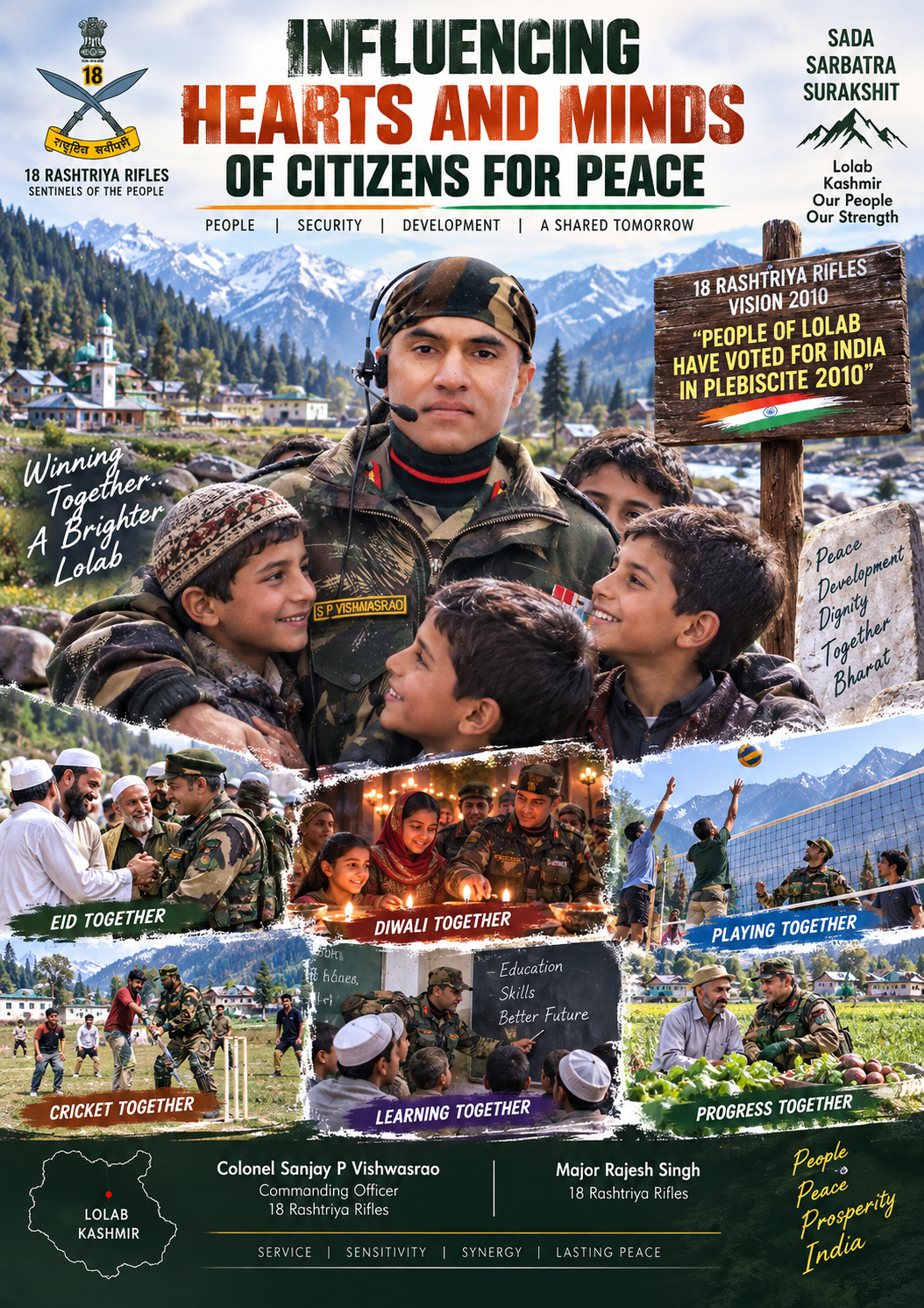
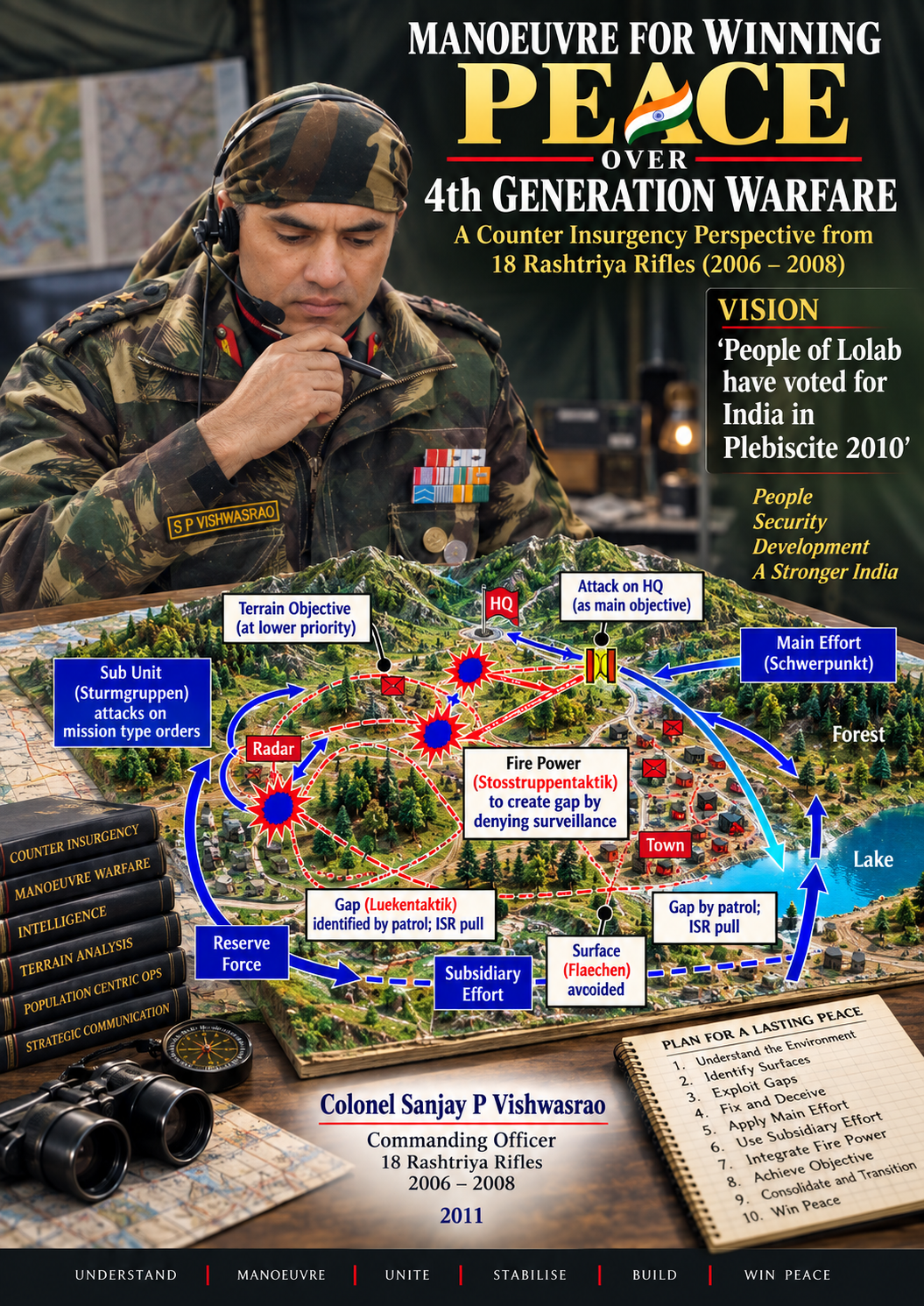
My book, Lage Raho Leadership (2015), and articles aren’t theory written from a desk — it’s the paper trail proving every strategy on this site was thought through before it was proven, including the first book on journey of 18 Rashtriya Rifles in Kashmir (2006-2008). We re-used it to win peace in Assam-Manipur (2015-2016).
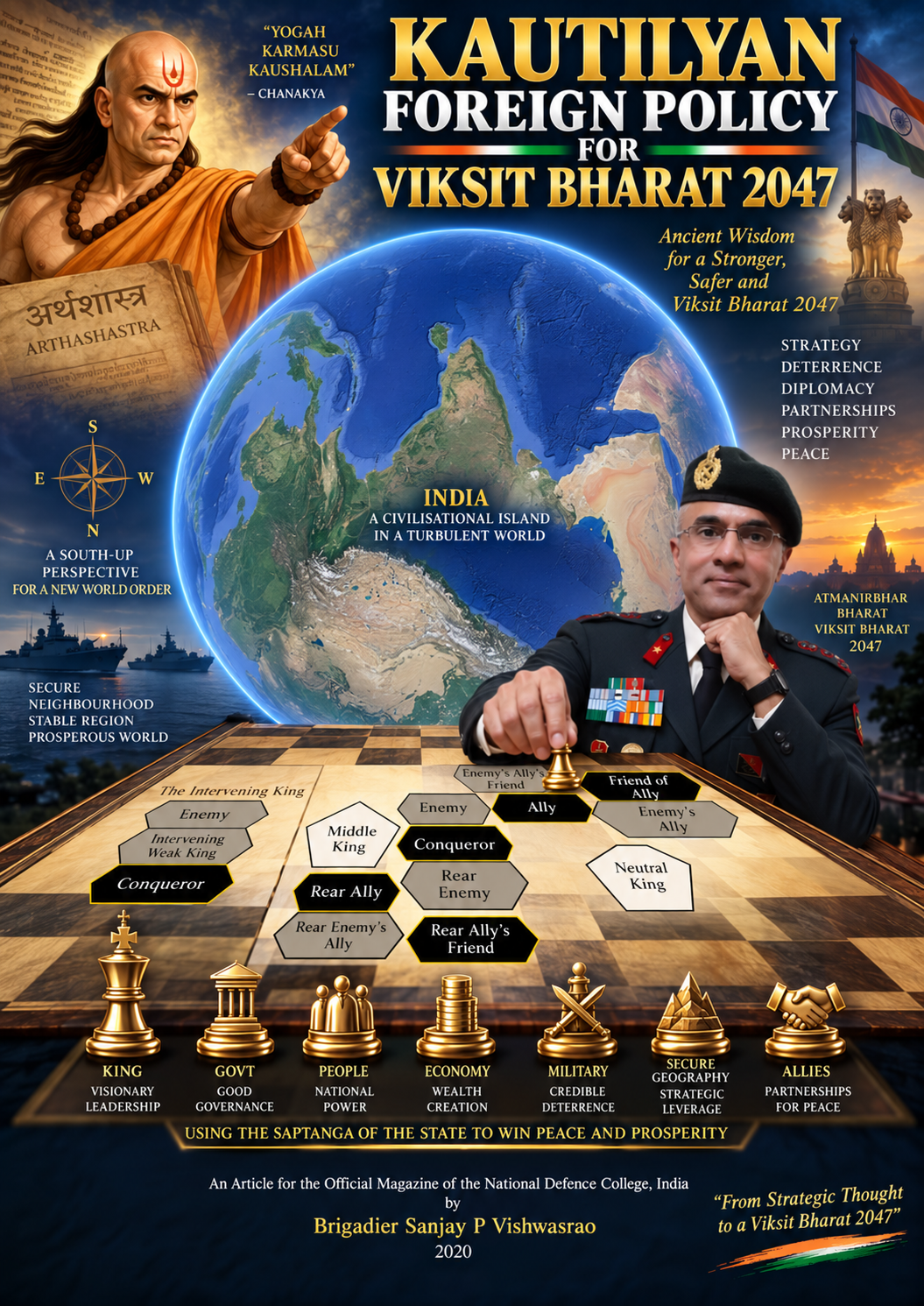
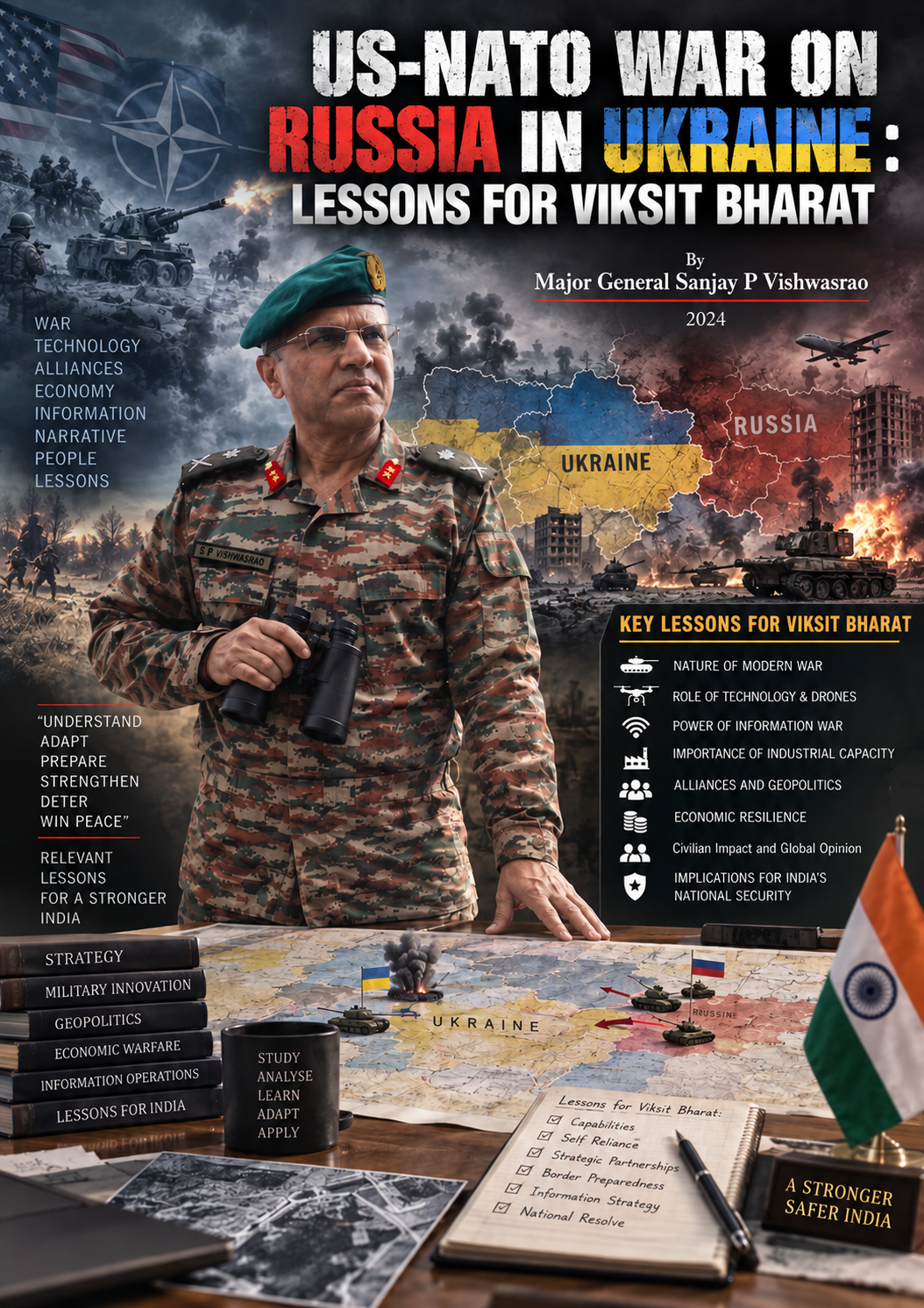
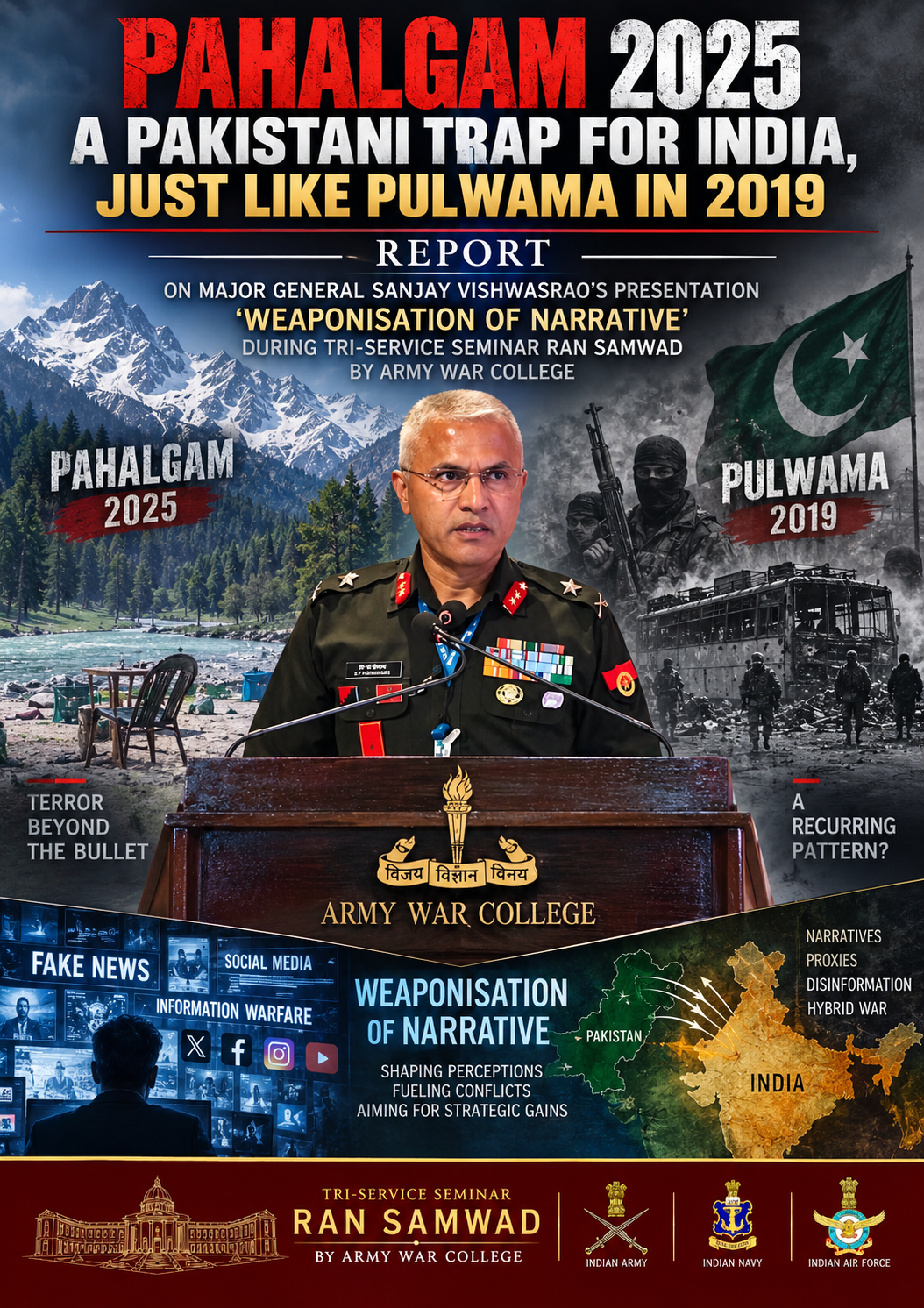
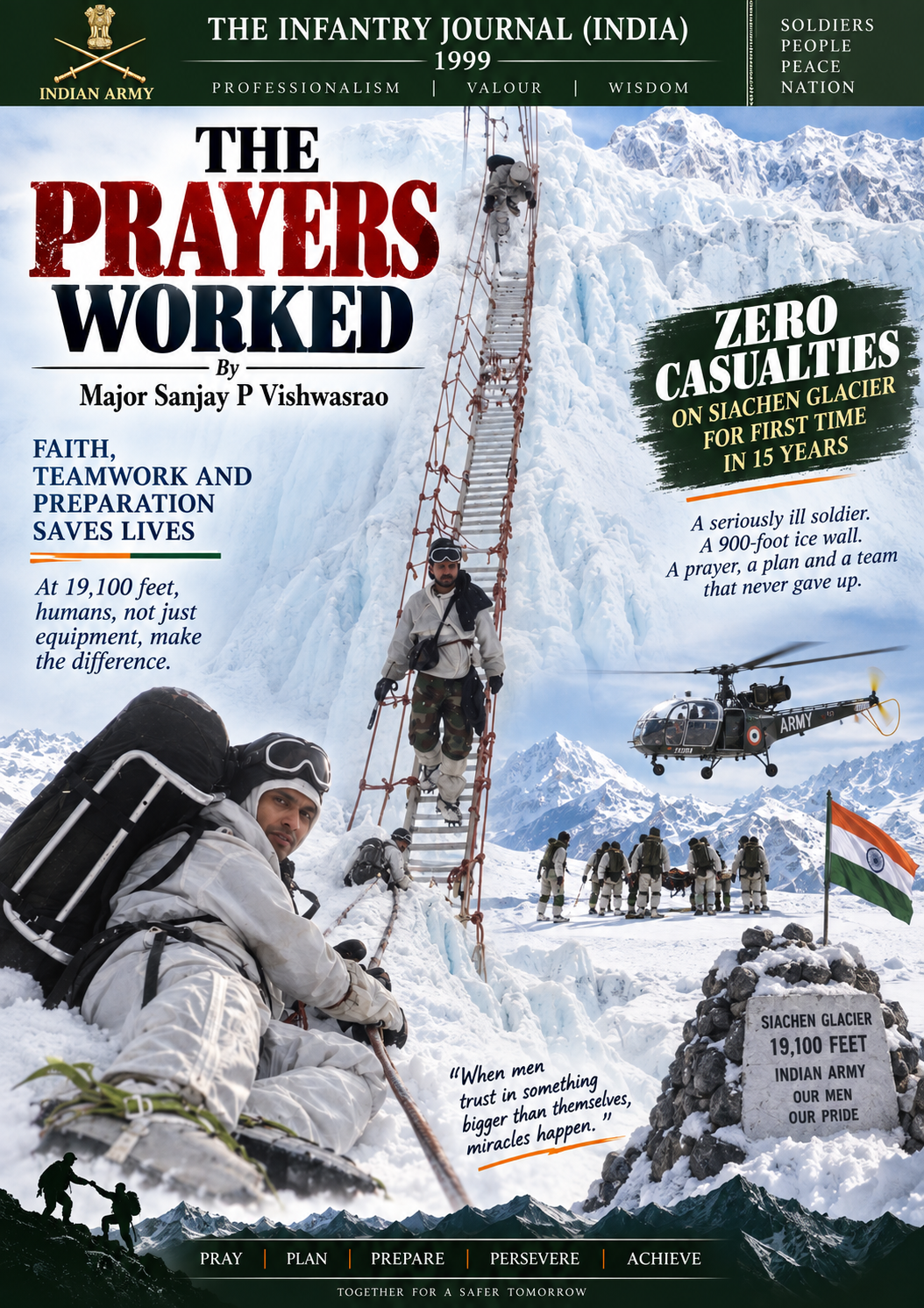
My articles investigate leadership, ethics, hard and soft power, information warfare, social media, strategic narratives, Pakistan and winning peace.
Together, they demonstrate an ability to diagnose complex problems, develop strategy, communicate clearly and convert insight into effective action i.e., a commander, not only a leader or manager.
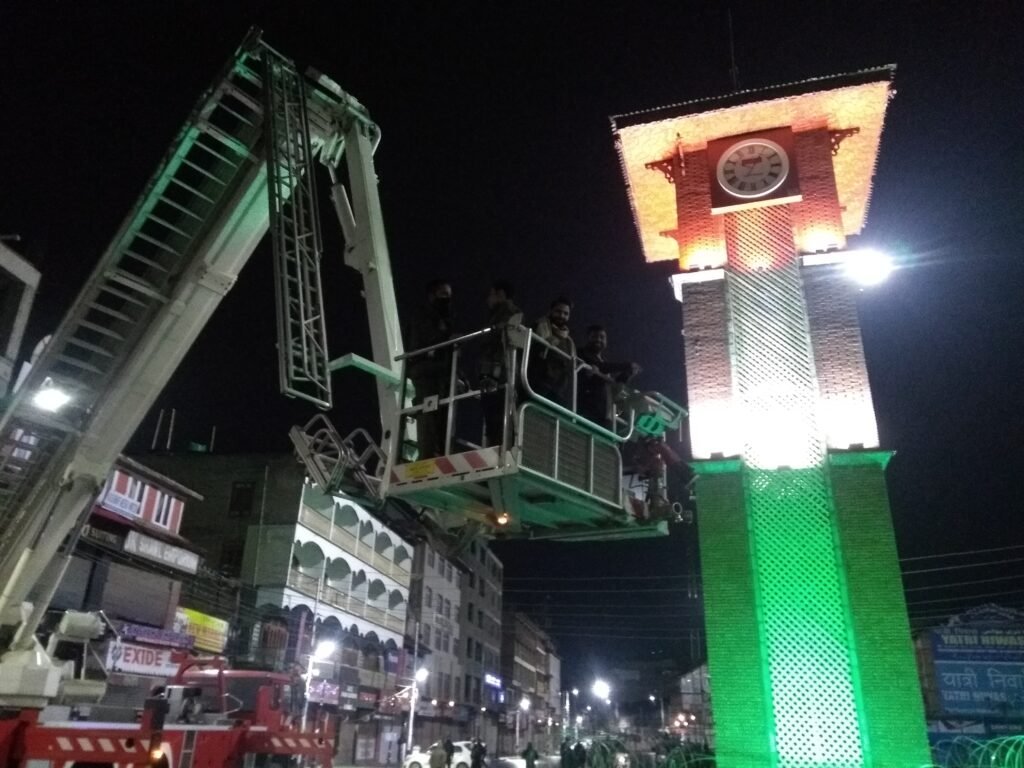
Major General SP Vishwasrao leading practice of hoisting the Tricolour at Lal Chowk, Srinagar, on 24 January 2022 by Sajid Yousuf and Sahil Bhat (on the ladder bay), for 26 January 2022.

Two published books and two manuscripts, each written from lived command — from the turnaround of 18 Rashtriya Rifles to the story of the Tricolour at Lal Chowk.

Three theses written years apart, each later proven as a strategy in the field — from low-intensity conflict to the Kashmir Tricolour Revolution.

Twenty-two articles on Pakistan & geopolitics, leadership, and strategy & tactics, written between 1999 and 2025.
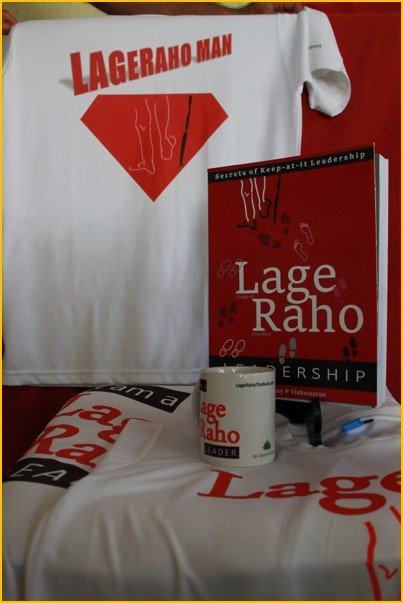
It is the real-life journey of 18 Rashtriya Rifles Unit of Rajputana Rifles Regiment 2006-2008.
It is an account by Colonel SP Vishwasrao, its commanding officer (CEO).
18 RR was in national news for suicide of a decorated officer, which was preceded by two soldier suicides and an inquiry into allegations of a fake encounter. On request of Lt Gen Deepak Summanwar, Colonel of the Rajputana Rifles Regiment, Vishwasrao volunteered to lead 18 RR in spite of what he was seeing on national TV.
The book is about the turn-around which culminated in 18 RR winning peace for 60,000 people of Lolab and the prestigious Army Commander’s Unit Citation in Jan 2009. Vishwasrao was awarded Sena Medal for this effort.
A more detailed and updated edition is being readied for publishing in 2027.

It is the real-life journey of code name Umar, an ex-Ikhwan who returned to after terrorist training in Pakistan Occupied J&K and Pakistan to join hands with Indian Army to fight the foreign terrorists.
The edited by Maj Gen SP Vishwasrao and the book was released by Lt Gen DP Pandey as GOC Chinar Corps. The aim was the resettlement of these brave Kashmiris who fought the tide of Azadi and Pakistan in early 1990s.
Code Umar was forced to pick up a Rifle AK 47, nearly died during his exfiltration to Pakistan Occupied J&K, got disillusioned seeing Pakistani deceit behind the azadi movement and joined hands with the Indian Army to help destroy terrorism.
The most interesting story is how Pakistan Army tried to infiltrate the Chinar Corps Commander’s office through Umar’s brother.

The manuscript was drafted in 2019-2020. The book was not published as the Army/ government did not give required permission.
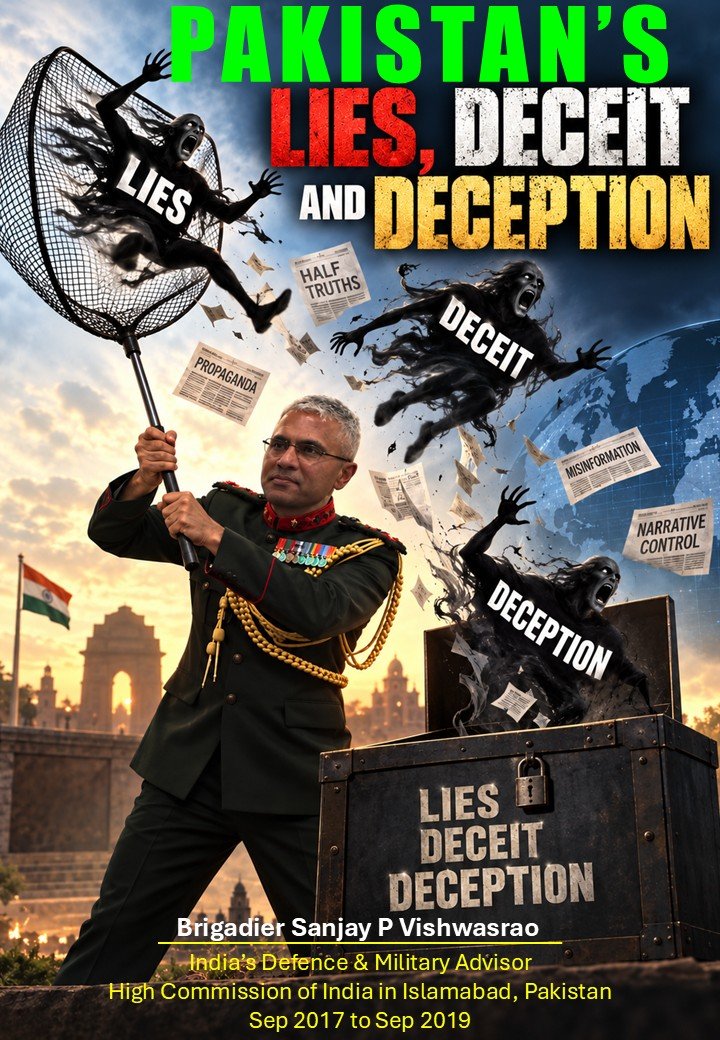
The book is based on research of Two-Nation Theory, Pakistaniat, re-writing of history of freedom struggle of Bharat/ Hindustan and the creation of Pakistan by Pakistan Army and Jamiat Ulema-e-Pakistan which is now called ‘Pakistan Studies’, and on the use of lies, deceit and deception in all matters of state of Pakistan.
The manuscript with 433 bibliography entries in 2020, is now being updated for publication in 2027/ 2028.
In the interim, I have tracked Pakistan and educated people on its use of lies, deceit and deception on my Twitter/ X accounts of @LageRahoKashmir and @SP_Vishwasrao.

I began working on the manuscript in 2026. Reading Smt Ranjna Raina’s 2022 book ‘Eyes Wide Open: Story of Tiranga in Kashmir’ helped refresh my memory.
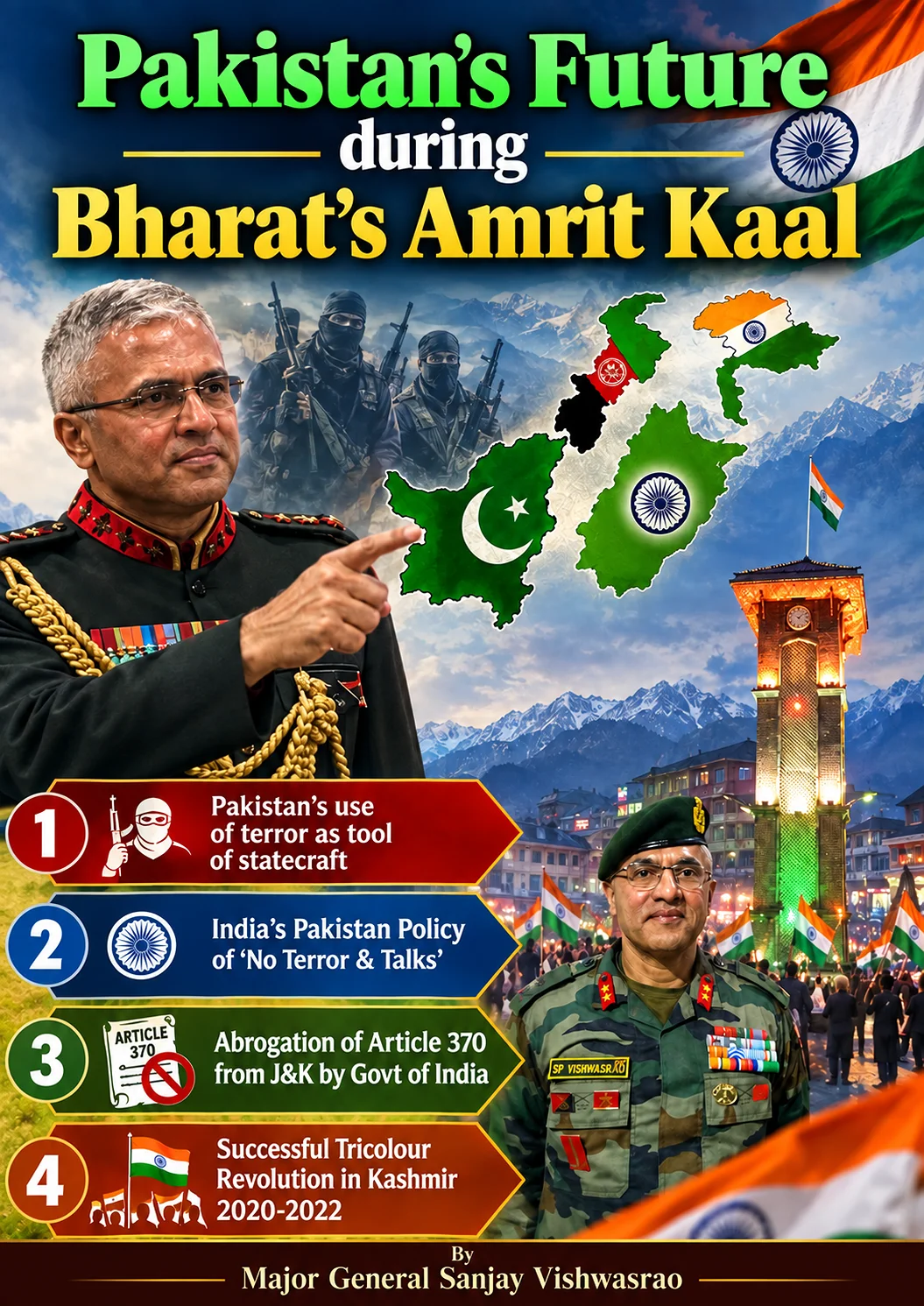
The book is my personal account of how we exploited the abrogation of Article 370 on 5th August 2019 to team up with our Kashmir friends to undo 75 years of Pakistani propaganda. The emboldened Kashmiris wanting a different future for themselves, hoisted the Indian Tricolour at Lal Chowk, Srinagar. They also picked up candles to push terrorists out of business of spreading fear.
As my salute to them, I plan to include stories of each courageous Kashmiri who dared to dream of a New (Naya) Kashmir under our Indian Tricolour.
The manuscript is planned for publication in 2026/2027. Meanwhile, our readers can scroll through my old Twitter/ X account @LageRahoKashmir to see teasers of our book.
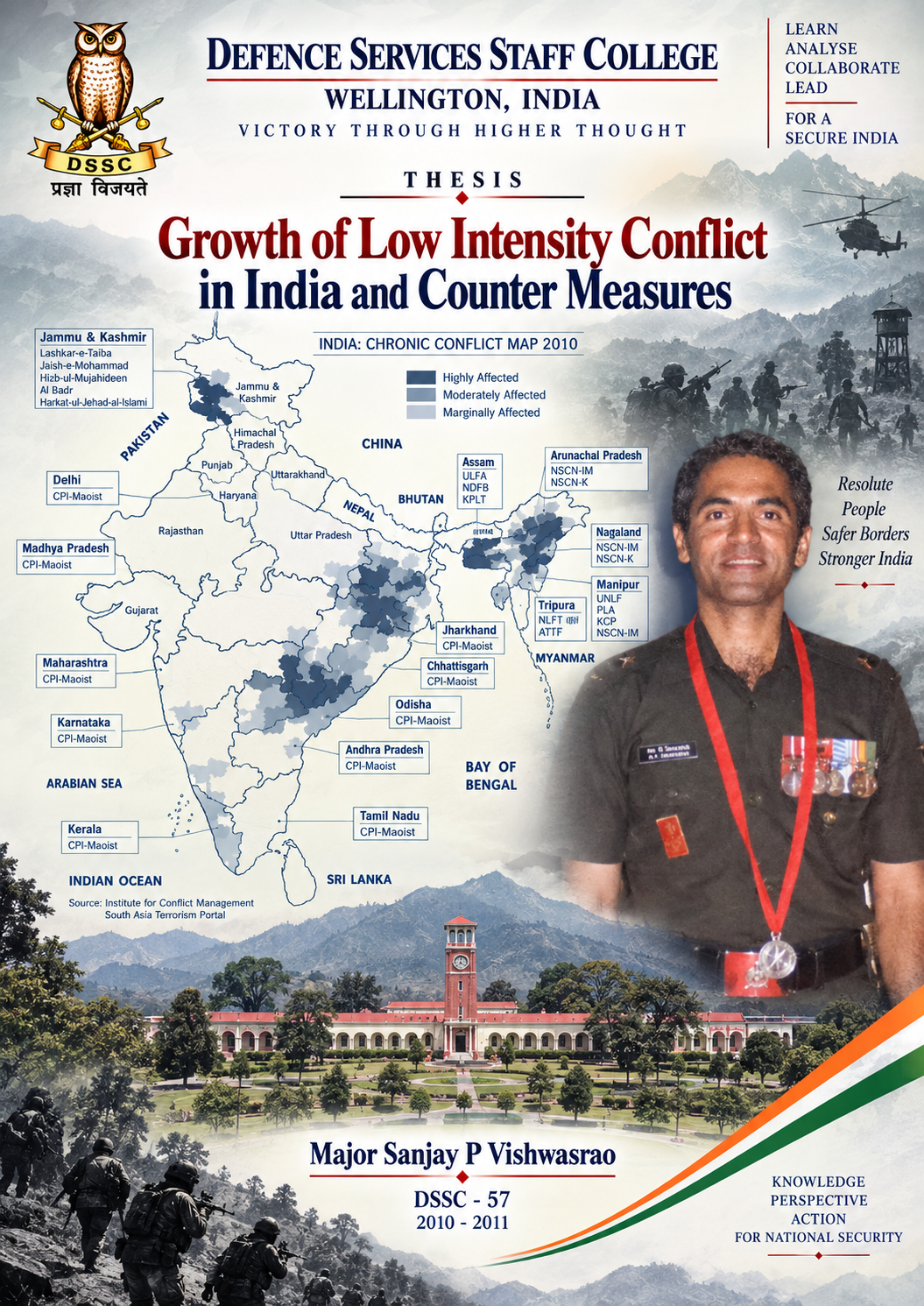
The thesis was awarded the Lentaigne Medal for best dissertation of DSSC-57 Course, 2002.
It had studied the causes of continued growth of low intensity conflicts in India (insurgency/ terrorism).
The thesis identifies poor governance and exploitation of the weak/ under represented by the rich as the main reason for continued popularity of terrorism and insurgency.

It became the most seminal work in information warfare in India with its recommendation: the centre of gravity of the anti-India Nexus in Kashmir is the ‘idea of azadi’ (not people as thought previously), and as the way to destroy an idea is propagation of an alternate idea in a better way, information warfare must become India’s main effort in Kashmir. It meant destroying the root cause of terrorism i.e., azadi, and not terrorists alone, who are a manifestation of the root cause.
As a corollary, with respect to Pakistan, it recommended: the centre of gravity of Pakistan is the Two-Nation Theory and therefore, information warfare should become the main effort in winning peace over Pakistan.
These recommendations were applied by me in Kashmir 2011-2013, in Assam-Manipur 2015-2016 and again in Kashmir 2020-2022.
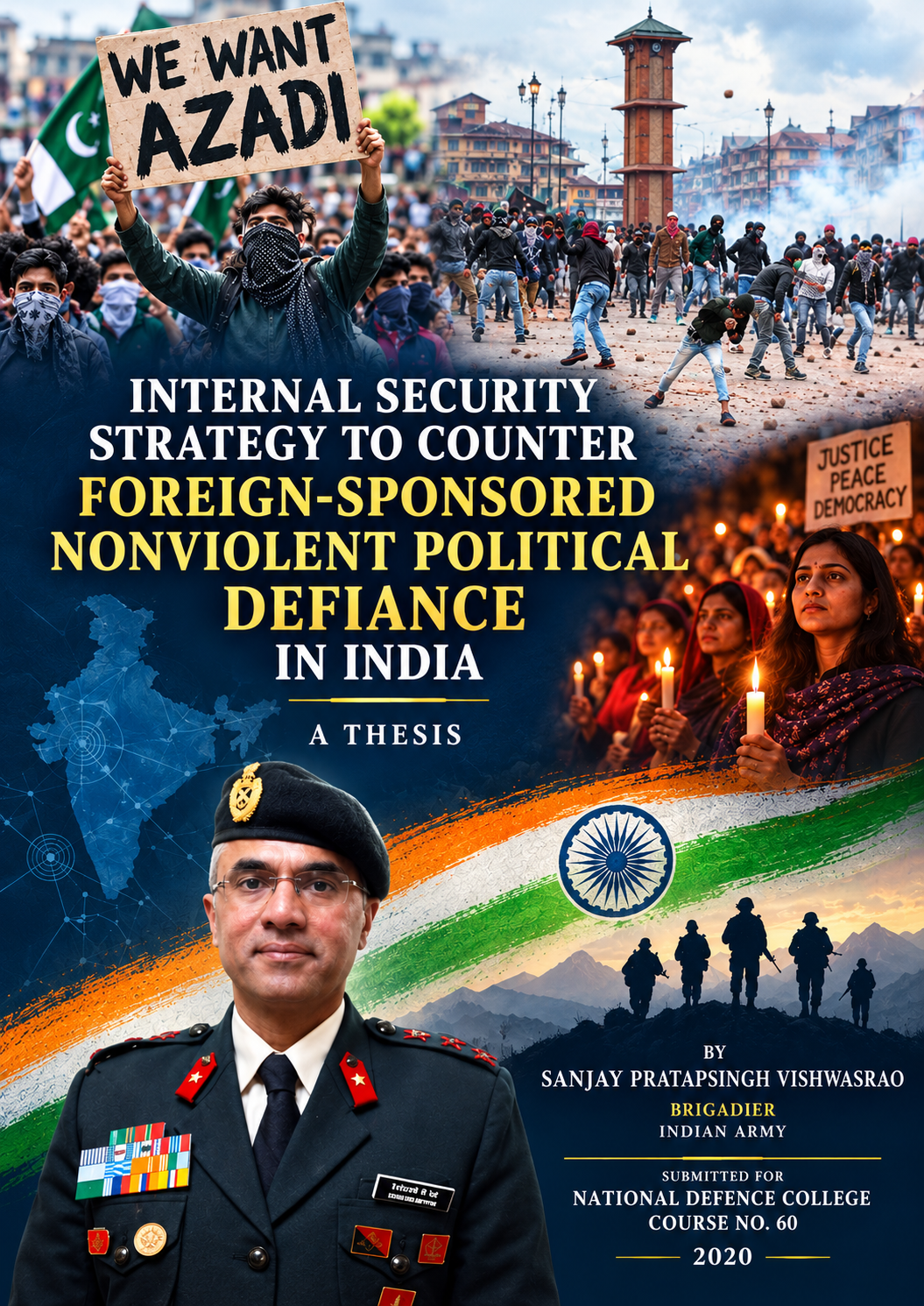
At the National Defence College in 2020, I wrote a thesis on countering foreign-sponsored nonviolent political defiance in Kashmir — arguing that “Azadi” itself, not the terrorists enforcing it, was the true centre of gravity, and that only a better idea, propagated better, could defeat it.
I sent it under a personal letter to Late General Bipin Rawat, then Chief of Defence Staff, and General MM Naravane, then Chief of Army Staff, asking them to review it and post me to Srinagar to execute the strategy. I also got an opportunity to meet General Rawat for an interview for the official magazine of the National Defence College 2020 and repeated my request in person.
What followed was the Kashmir Tricolour Revolution — a thesis that didn’t stay on paper, but became the strategy I was sent to prove.
A summary of impact across thirty-seven years. Figures reflect verified outcomes from active service.



Nine voices from the postings: generals who commanded him, a minister he worked alongside, and Kashmiris whose lives the work touched.
Only a few officer-leaders dream as big as Maj Gen SP Vishwasrao, and deliver as well. His contribution to national security is unmatched, especially in 18 Rashtriya Rifles and Kashmir. Would love to have him on my team again — anytime, anywhere, for any mission.
The first ray of hope for all Kashmiris came from Maj Gen Vishwasrao. He made the impossible happen for the first time in Kashmir in three decades — Vyeth Truvah, the boat ride from Jhelum to Ganderbal, peaceful Muharram from Dal Gate to Lal Chowk, singing of the National Anthem in public. The list is endless.
Maj Gen SP Vishwasrao gave us hope. To all Kashmiris he seemed God-sent. Imagine his simplicity — he dropped into my home unannounced! He positively impacted relations between Kashmiris and our Army, and changed Lal Chowk and our pheran forever.
We first met to clean Haflong Lake. His method won him many hearts — support society to do it, get ownership of all tribes, and take no credit. His speed put us in a tizzy: Maibang Museum, Judima Wine, school pipe band, Yoga, World Tourism Day. Most of all, his six songs united us tribals.
Over a winter 2020 Sunday lunch in our home in Gurugram, Maj Gen Vishwasrao presented to my parents and me an impossible strategy — the Tricolour Revolution in Kashmir. I have lived this journey with him from 2021. Kudos to him for winning bloodless peace in Kashmir.
In a counter-terrorist operation in 2007, 18 Rashtriya Rifles had lost two soldiers; there was no trace of the terrorists. I called Sanjay on the radio set. He assured me that revenge would be taken. They ended the operation that day after killing four Pakistani terrorists. A true example of Lage Raho Leadership.
I have lived Maj Gen Vishwasrao's dreams for India since I was a brigadier and he a colonel. He did not fail me when I posted him to Assam — he won peace in Dima Hasao. As DG DIA, I found his reports on Pakistan insightful. General Rawat posted him to Srinagar in 2020 for a purpose — he achieved it.
Maj Gen Vishwasrao brought the best mix of committed soldiering and visionary leadership to Kashmir. He is single-handedly responsible for making the Tricoloured Lal Chowk India's most popular selfie point and for installing the 100-foot Tricolour at Haer Parbat, Srinagar. An amazing soldier of Maa Bharat.
The idea of Kachri Floating Village has grown from one six-hour boat reconnaissance we did in 2021 to a ₹20 lakh Army Sadbhavana project, then a ₹30 crore project, and now a ₹250 crore government project. We Dal dwellers will always remember him as our saviour.
"1,000 YEARS OF FOREIGN RULE AND THE MACAULAY EDUCATION POLICY HAVE DESTROYED OUR RIVER–PEOPLE LINKS AND RIVER–PEOPLE CULTURE. THEIR RESTORATION IS A SUCCESS PREREQUISITE."


