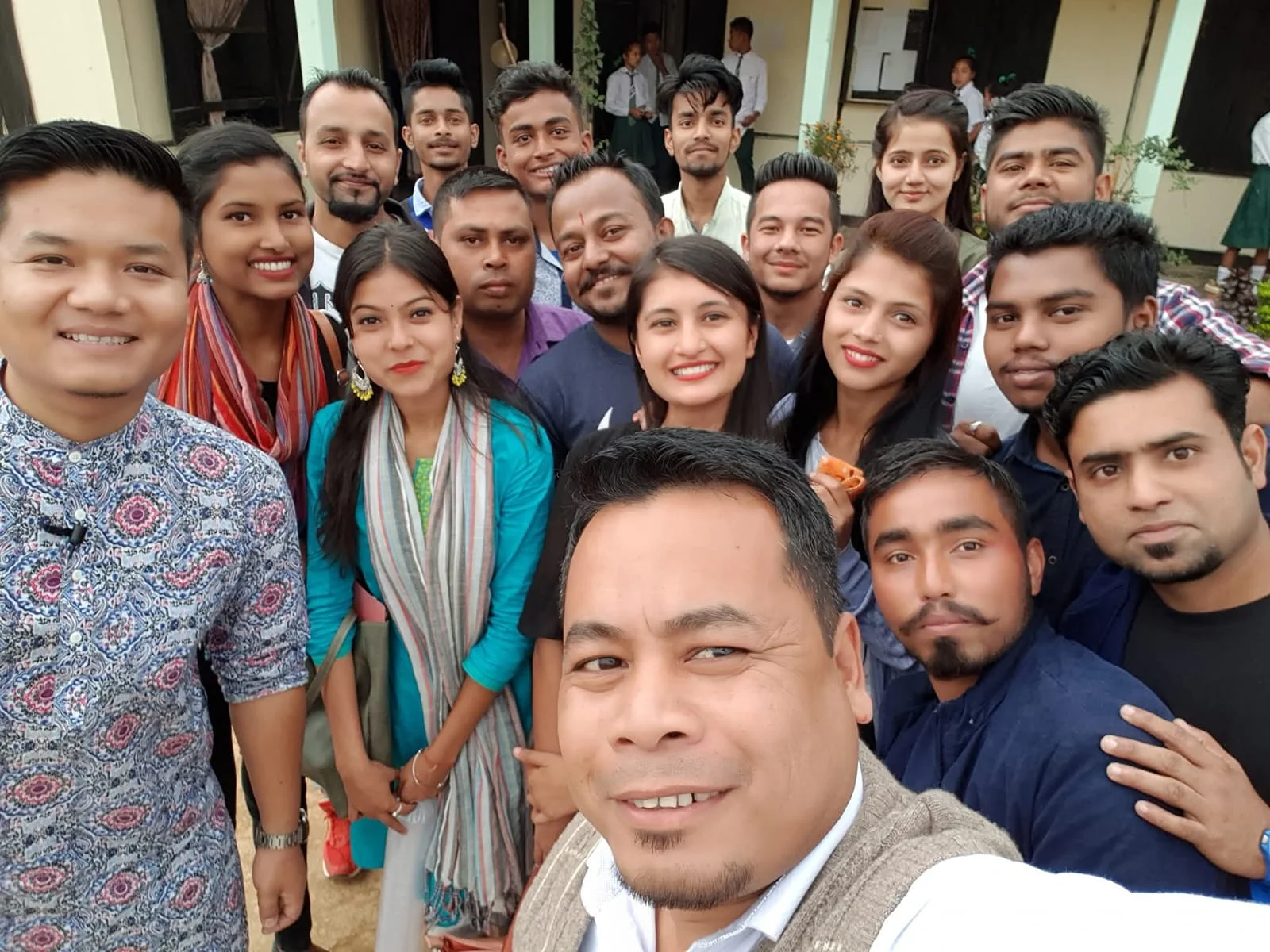
With toffees, candles, songs and more, we united 13 tribes and 6 non-tribes under the ‘All Tribes, One India’ Tricolour Revolution for peace in Dima Hasao (Assam) and Jiribam (Manipur). The peace won spared 2,000 soldiers from rear-area security for deployment on the Northern border.
12
167
Two units won Army Chief’s unit citations and one unit won Army Commander’s unit citation, January 2017
72
Kuki tribe's Leiki in Naga tribe's territory — first and only in 20 years
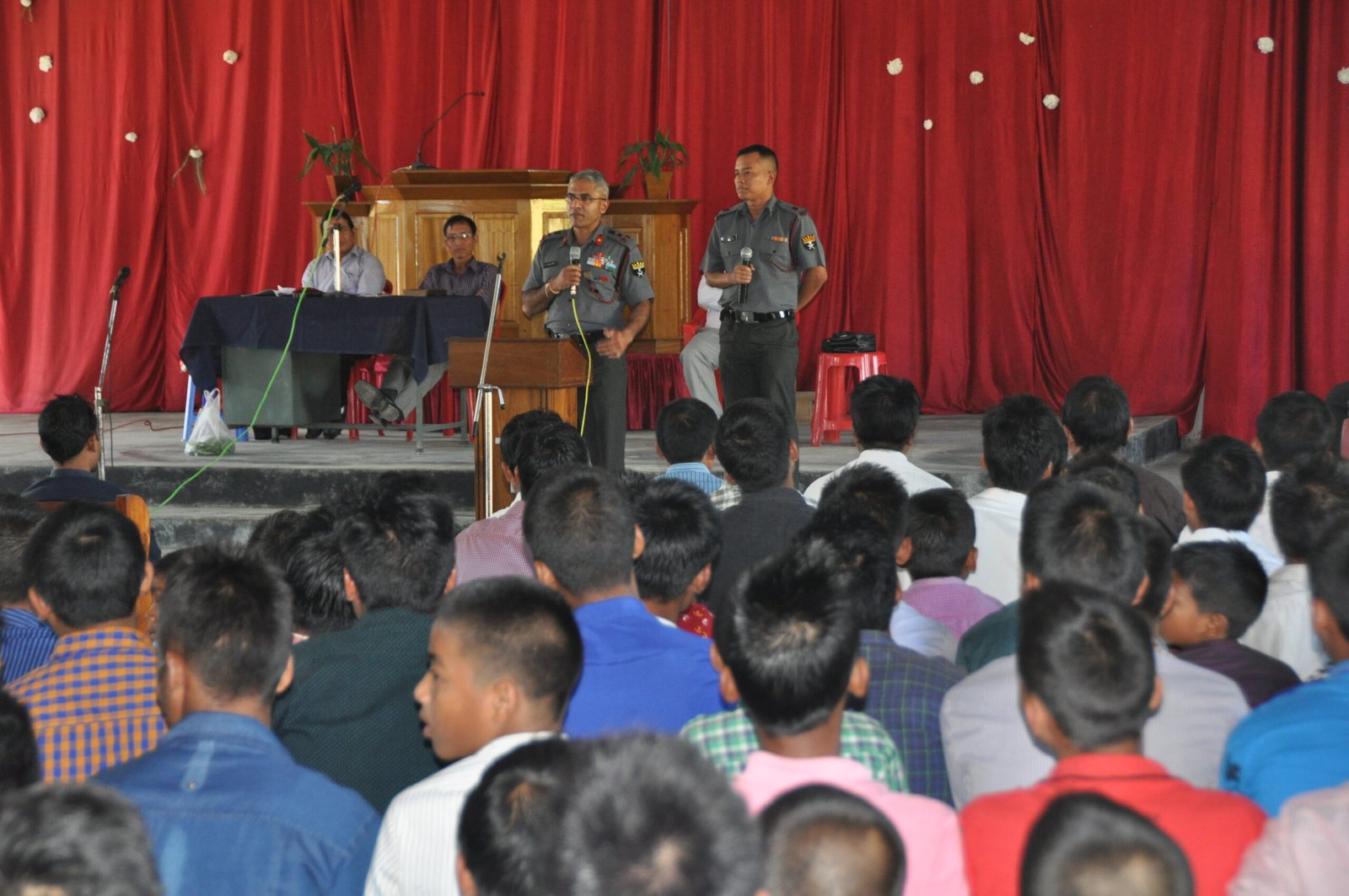
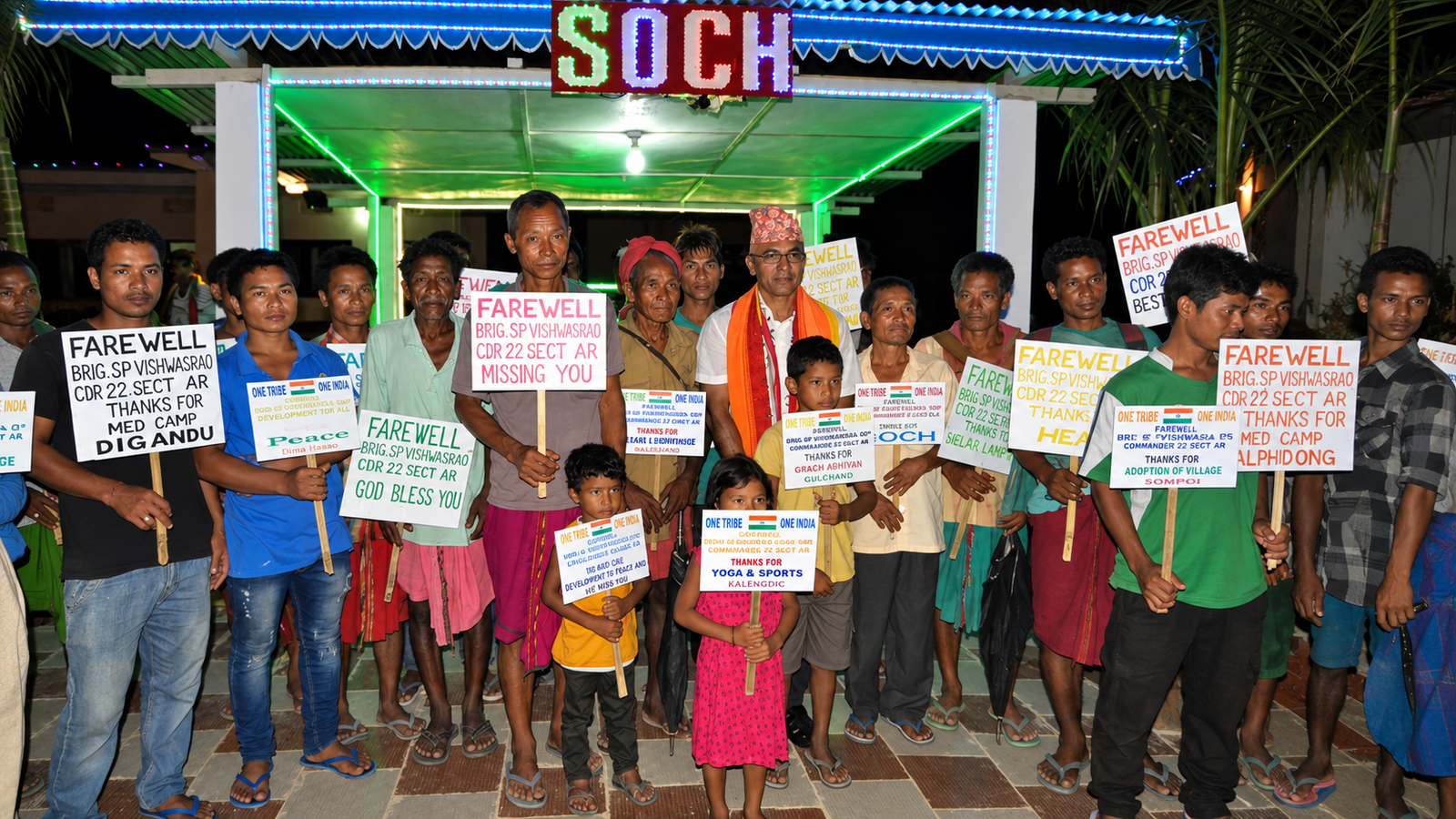
When Major General V.G. Khandare recommended me for the role of Sector Commander (CEO) of Assam Rifles, I volunteered instantly and ran a ten-day reconnaissance from Pune, before taking charge of 22 Sector Assam Rifles. The sector was responsible for counter-terrorism across South Assam and West Manipur’s Jiribam district, a region fractured by thirteen tribes, six non-tribes, and decades of mutual mistrust among them. I had just published my book ‘Lage Raho Leadership’ on organisational turnaround drawn from my previous command of 18 Rashtriya Rifles. I gifted a copy to each of my four Commanding Officers (junior CEOs) and told them plainly that I intended to follow it exactly, and that they would do well to get every officer to read and follow it.
The vision was simple and, at the time, radical: “All Tribes, One India”, in which every community would choose a shared national identity over fragmented tribal ones. The strategic model was based on Gene Sharp’s ‘strategic nonviolent political defiance’ introduced in Kashmir by Pakistan in 2008. I visited all 24 company posts personally, then went village by village, church by church, asking one question: Assam Rifles is known as the friend of the hill people, so could the hill people become friends of Assam Rifles (and thus of India)? Winning that trust starved the insurgency of its support base, and faster, sharper decision-making cycles did the rest. We outmanoeuvred insurgents and anti-national elements at the strategic and tactical levels, with strategic communication as our main effort and tactical counter-terrorist operations as our subsidiary effort.
Lieutenant General Bipin Rawat, later India’s first Chief of Defence Staff, visited us in March 2015 after a successful counter-terrorist operation. Instead of briefing him on the recent arrest of armed insurgents, I briefed him on our new strategy to win peace, the “All Tribes, One India Tricolour Revolution”. And I added: “Sir, this is a test case for implementing this strategy in Kashmir in the future.”
In 2012, when I was a colonel in the Chinar Corps in Srinagar, my Corps Commander, Lieutenant General Ata Hasnain, had me brief him on my investigations into Pakistan’s use of ‘strategic nonviolent political defiance’ in Kashmir since 2008. He therefore knew where the idea had come from and readily agreed. He also directed me to engineer a genuine grassroots movement against illegal extortion, something he was separately attempting in Nagaland, namely the ACAUT Movement (Against Corruption and Unabated Taxation). We succeeded by August 2016, using cultural investment rather than force: reviving the Maibang Stone House, founding the Dimasa Tribal Museum, and launching the Judima, Lungzubel, Asalu Fort and Amur Falcon festivals. All are now government-funded assets. Tribals who once attacked the Guwahati–Silchar train became its quiet protectors, trading along it and feeding us intelligence. Kukis who had abandoned Leiki village twenty years earlier, during the Naga–Kuki ethnic clashes, resettled there, making it the first and only village ever re-established organically. Local villagers themselves turned away Naga (NSCN-IM) terrorists who came 40 days later and threatened them for living together.
By January 2017, two commanding officers (CEOs) received individual awards, three out of four of our units received the Army Team/ Unit Awards, and our tally of soldiers awarded reached 72, a record for the Indian Army. My efforts were not awarded.
The peace held well enough that 3,000 of our soldiers were freed to reinforce Manipur, relieving 2,000 regular Army troops for redeployment to the Northern border. It held long enough that in 2023, seven years after I left, the government withdrew the Armed Forces Special Powers Act from Dima Hasao district.
I first met Major General Sanjay Vishwasrao at a seminar in Agartala on “Lasting peace in North East India”, where he graciously gave me a platform to address a large gathering of Indian Army Personnel. A profoundly down-to-earth humanitarian with a secular outlook, he visited my home and church in Fiangpui, earning our deep affection. His “One Tribe One India” initiative fostered peace in Dima Hasao District of Assam, and he led the “Save Our Culture and Heritage” project preserving our Biate Tribe’s Lungzubels (stone jars). Later, as an Associate NCC Officer, I was inspired anew when he headed the NCC Directorate in Delhi cultivating integrity among cadets. The man who encouraged the Kashmiris to embrace Tiranga after abrogation of Art 370 and gave us “Once a Cadet, Always a Cadet” will, I am fully sanguine, keep serving our nation faithfully and sincerely for years to come.

We met Brigadier Shri Sanjay Vishwasrao in 2015, when he was posted at Haflong as the Brigadier of 22 Sector Assam Rifles. Haflong is the headquarters of Dima Hasao District in the state of Assam. It is a beautiful hill station with a population of approximately 50,000 even today.
Dima Hasao was a strife-torn district then. Due to insurgency problems, peace was far gone. There were communal clashes too, just like in Manipur today. The district, which was known for its uniqueness, had seen its various tribes, who used to live peacefully together, become divided. People wanted peace, but there was hardly anyone who dared to step forward and speak up for peace and brotherhood.
But then, we were introduced to Brigadier Vishwasrao and saw how Brigadier Sir personally pushed every effort to bring people together. He and his boys did everything, from being a lasting presence to building peace in the district.
Be it the ‘Three Sisters Ride’, with the tagline ‘Ride for Unity and Peace’, covering the states of Assam, Meghalaya and Mizoram, or the monolithic stone jars, which had become a subject of interest, it was Brigadier Vishwasrao Sir who first brought them to light. The festivals introduced to draw attention to these historic places continue to this day.
He launched a unique campaign called ‘Dima Hasao-19 Unity’ (Unity of 13 Tribes and 6 Non-Tribes, One Dima Hasao and One Trust). The whole town of Haflong was in a festive mood during those times. Haflong Town is called ‘Mini Switzerland’, and indeed, it started to take that shape. He brought a healing touch with his ‘All Tribes, One India’ strategy.
The Judima Festival, Amur Falcon Festival, Jatinga Festival, Save Haflong Lake Campaign, Bushu Dima celebrations, pre-Christmas celebrations, and creating awareness about the Jatinga Bird Mystery are a few instances I can still remember, in which the Assam Rifles participated fully under the command of Brigadier Vishwasrao Sir.
He was deeply connected with the people. His return gift of Tricolour gamchas in exchange for the tribal gamchas that tribals gifted him formed a strong bond among all the tribes, and between us tribal people and the Assam Rifles. He also installed a ‘Dima Hasao-19 Unity Post’ in the centre of Haflong Town. It has the gamchas (scarves) of all the tribes and non-tribes, with two Tricolour gamchas on both sides. This symbol of unity and brotherhood had a huge impact on all tribal and non-tribal people of Dima Hasao District.
Peace followed, and it helped tribal community leaders themselves step forward and stand their ground against extortion by insurgents.
Brigadier Vishwasrao Sir’s initiatives of improving the Maibang Stone House and developing a museum for the Dimasa Tribe have been further developed by the Assam and NCHAC Governments into Ranachandi Park and the Dimasa Heritage Museum and Dishru Research Centre.
Brigadier Sir was, and continues to be, a true friend of the tribal hill people of Northeast India.